
Peja Pavillion
2025
The Luminous Oasis
Location: Peja, Cosovo
Type: Competition
Program: Pavillion
Design: 2025
Statue: Unbilt
Architects: Stay Architects
Principals: Junghee Hong, Jungseok Ko
Design Team: Youngdo Kim, Moongyem Kim, Hyunji Kim, Jieun Kim, Hyunjun Song
Peja, a city nestled at the foot of the Rugova Mountains in western Kosovo, is renowned for its natural beauty and rich cultural heritage. The city is one of the oldest in Kosovo, with a history that dates back to ancient times. Peja is home to numerous historical landmarks, including the ancient 15th-century water fountain which is a center of community gatherings and social interaction for centuries.
If a pavilion that emphasizes modernity while respecting history is planned at the end of the square along with the ongoing improvement work on the square and the plan to make the square pedestrian-friendly, a new focal point centered around the old well will be formed.
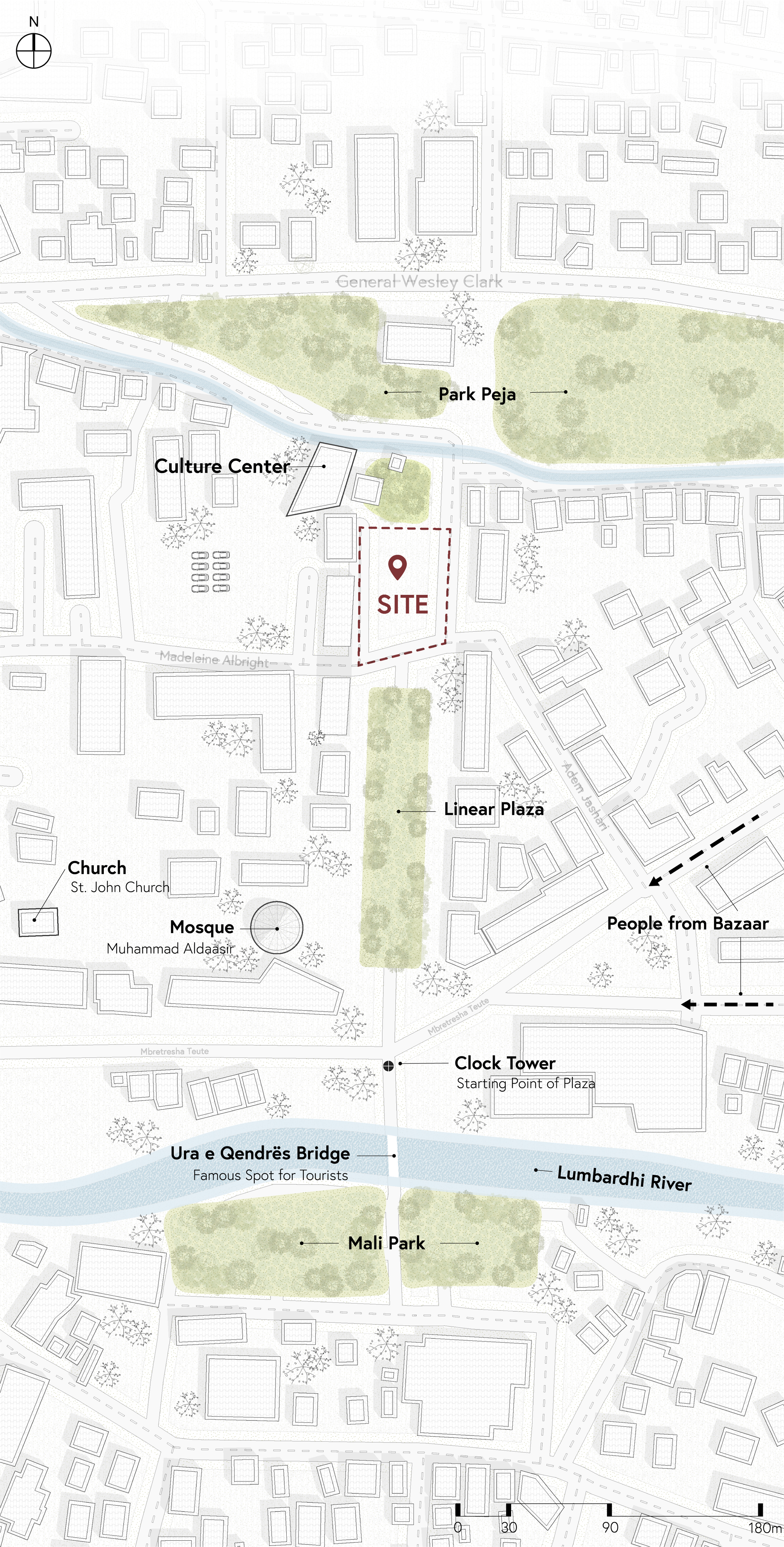
The strong axis of the square, formed in the north-south direction based on the site, connects to the parks at both ends. This linear square in the north-south direction starts from the clock tower with the church and mosque, passing the park and the Lumbardhi River in the south, and extends about 200m to the north.
The site where the pavilion is planned is the last leg of the square and is an important point that extends the route to the waterway, cultural center, and park in the north beyond the square.
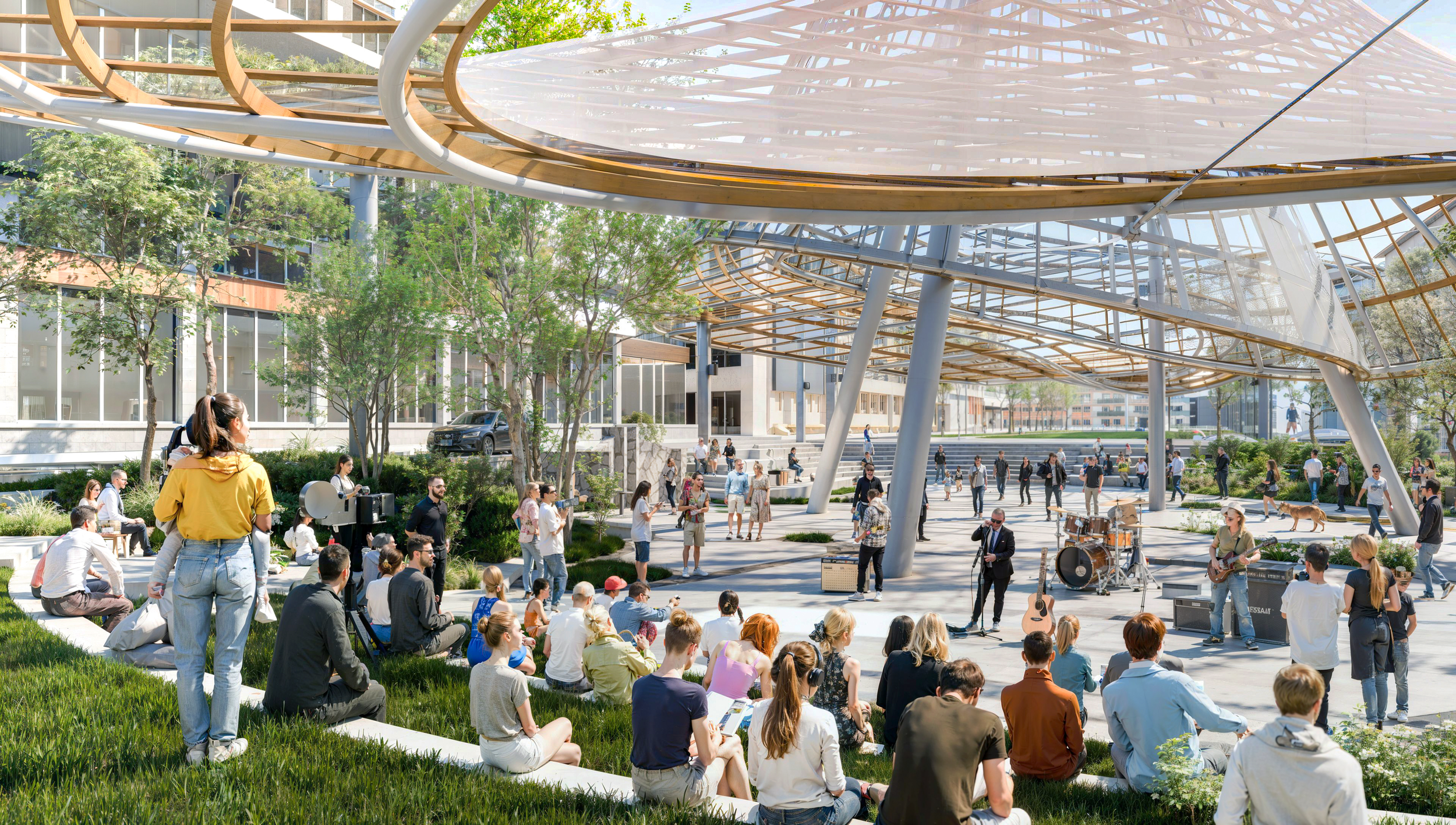
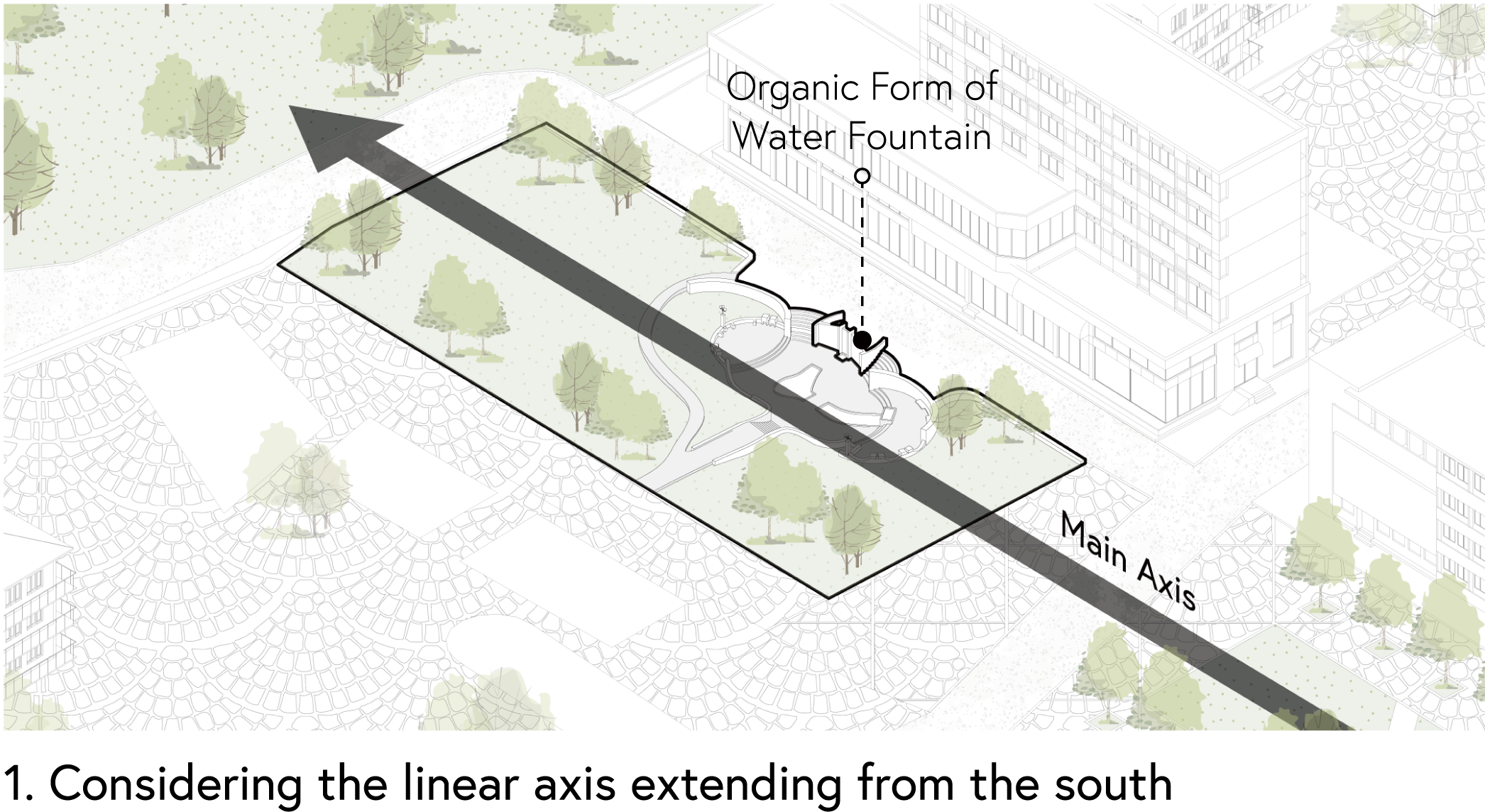
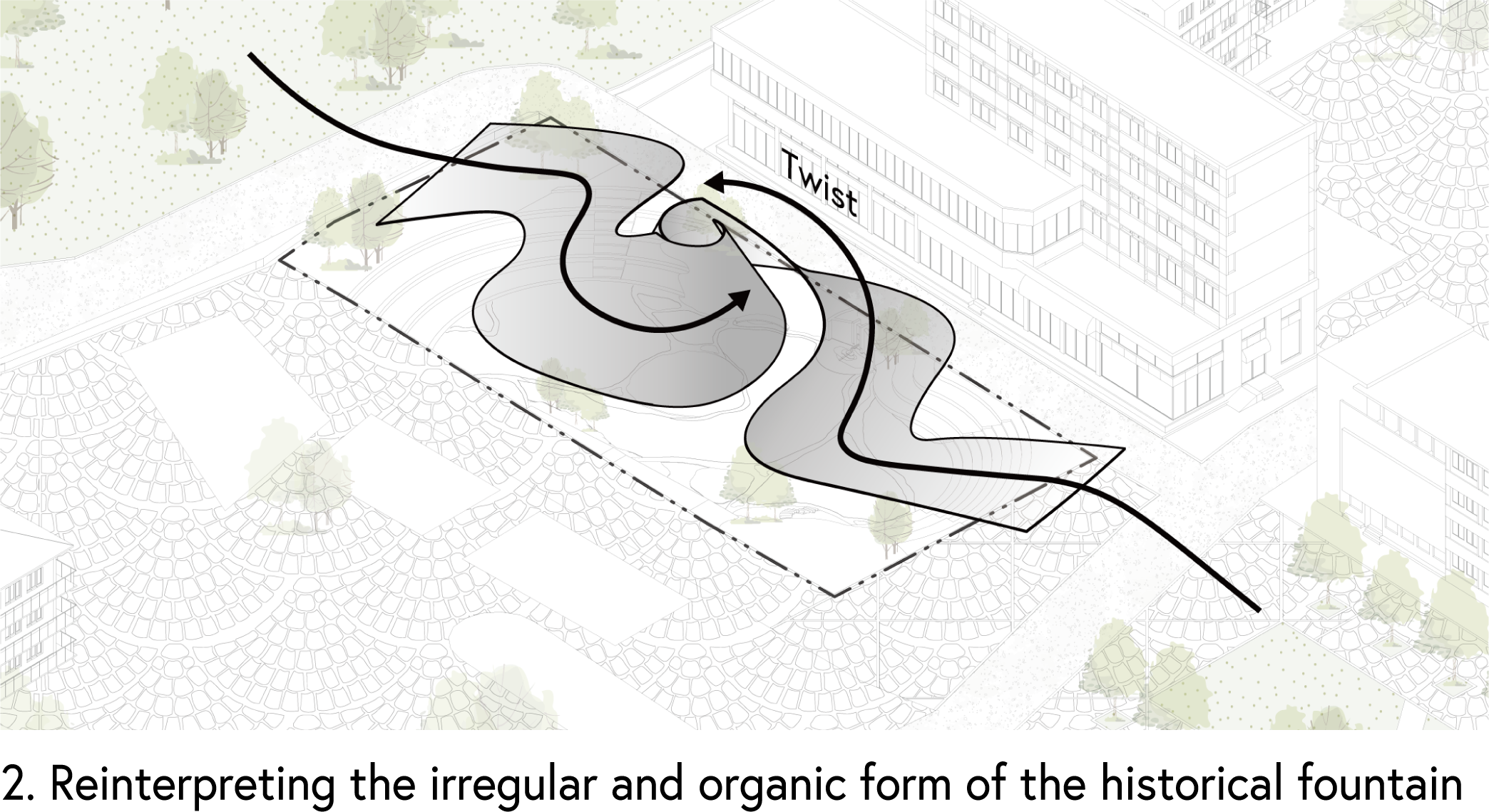
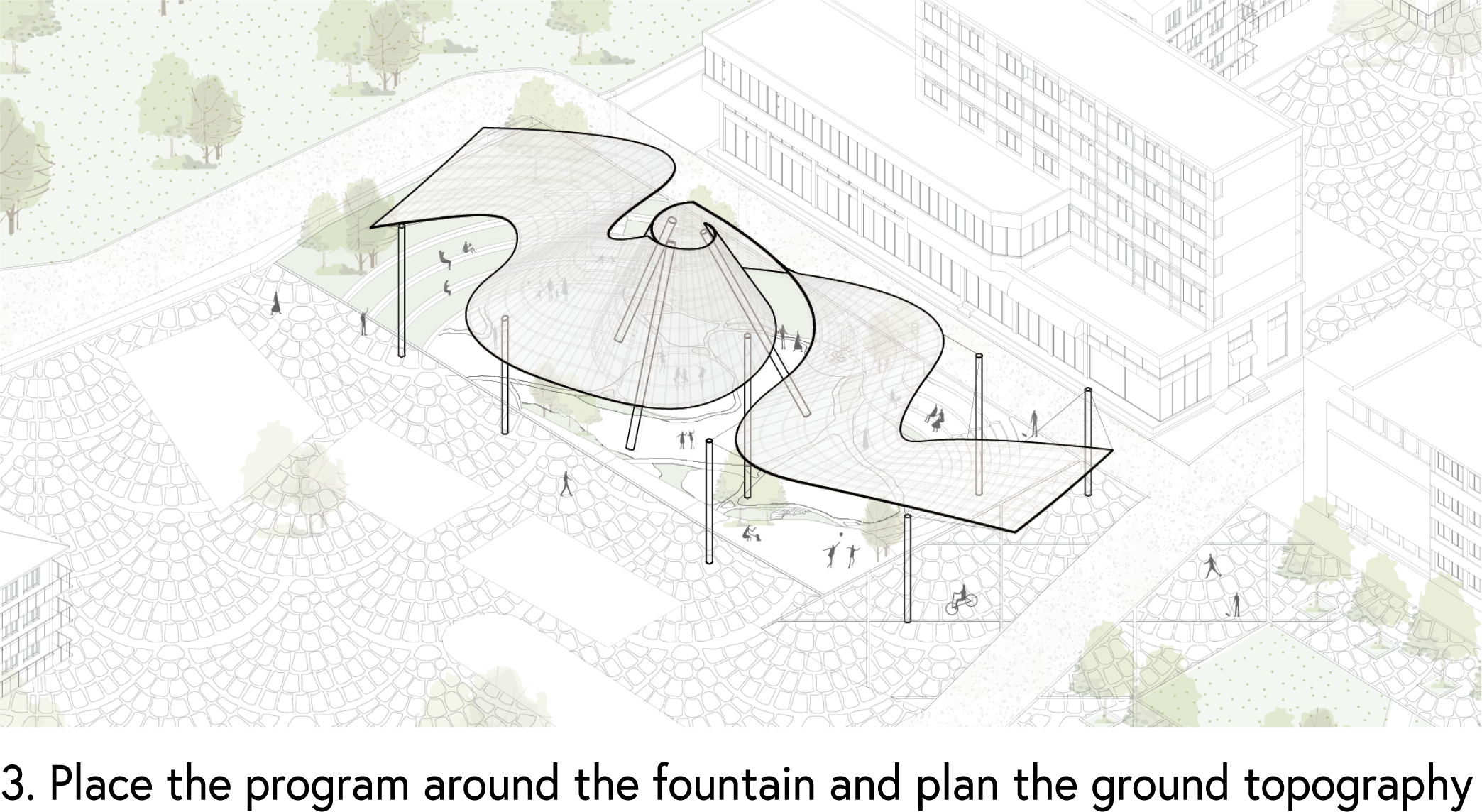
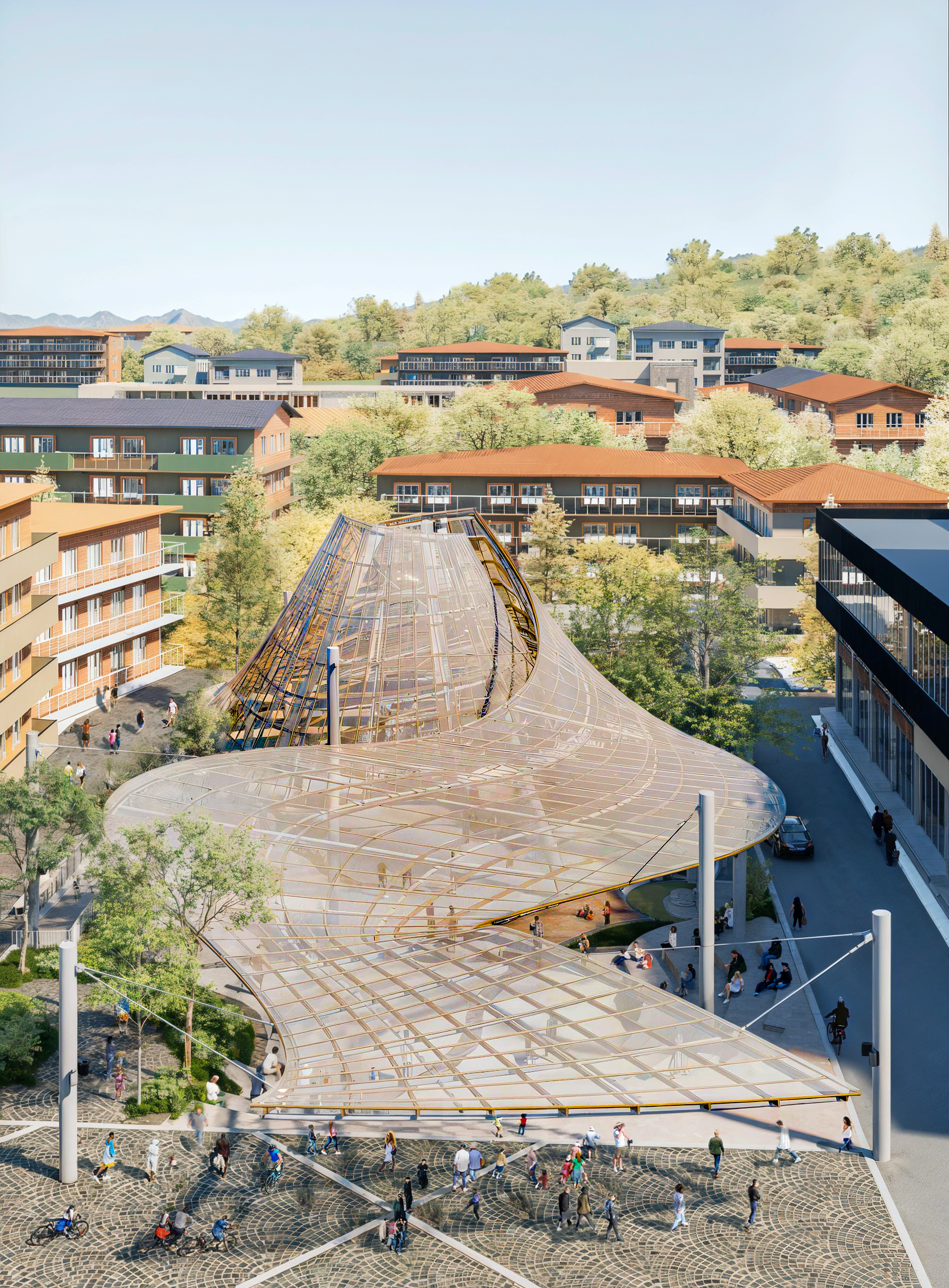
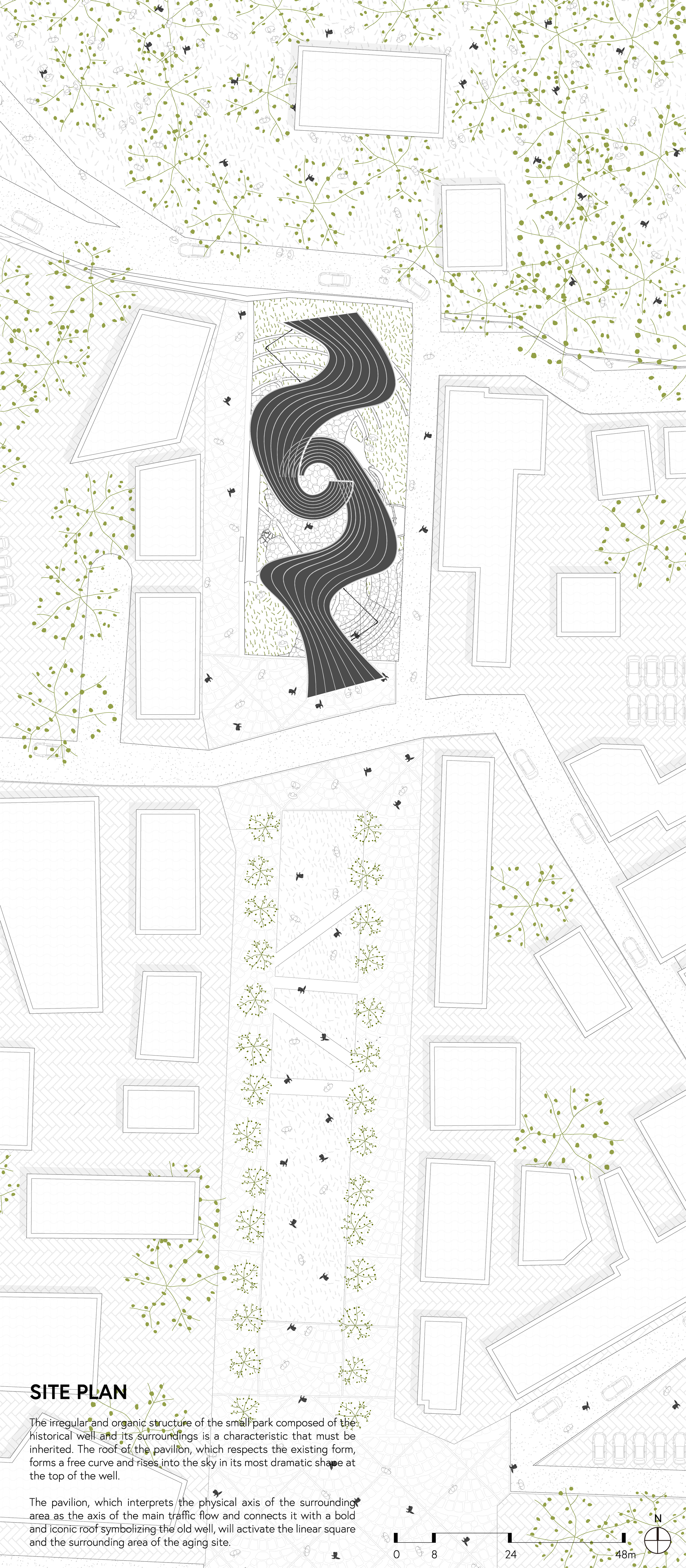
The irregular and organic structure of the small park composed of the historical well and its surroundings is a characteristic that must be inherited. The roof of the pavilion, which respects the existing form, forms a free curve and rises into the sky in its most dramatic shape at the top of the well.
The pavilion, which interprets the physical axis of the surrounding area as the axis of the main traffic flow and connects it with a bold and iconic roof symbolizing the old well, will activate the linear square and the surrounding area of the aging site.
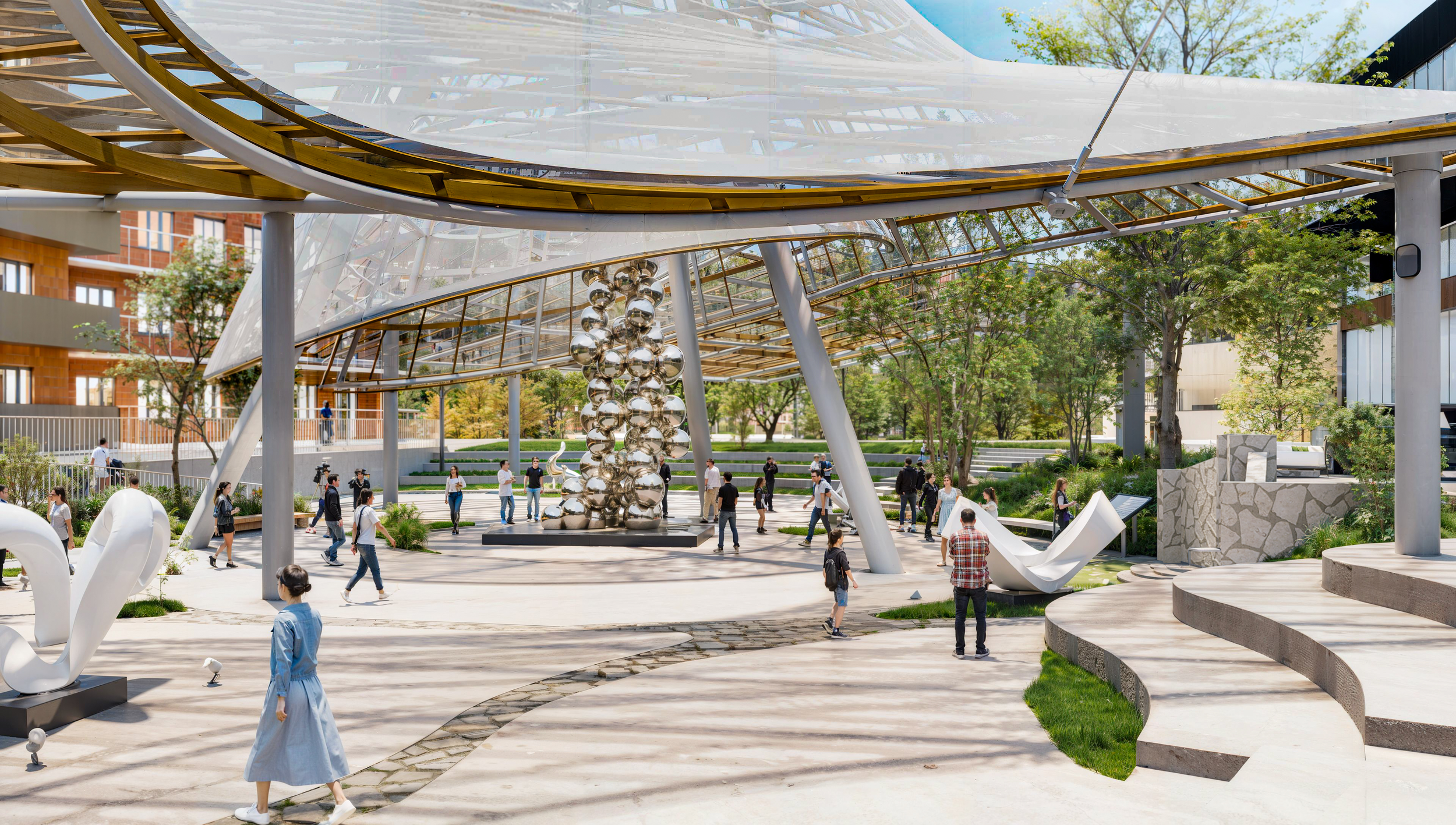
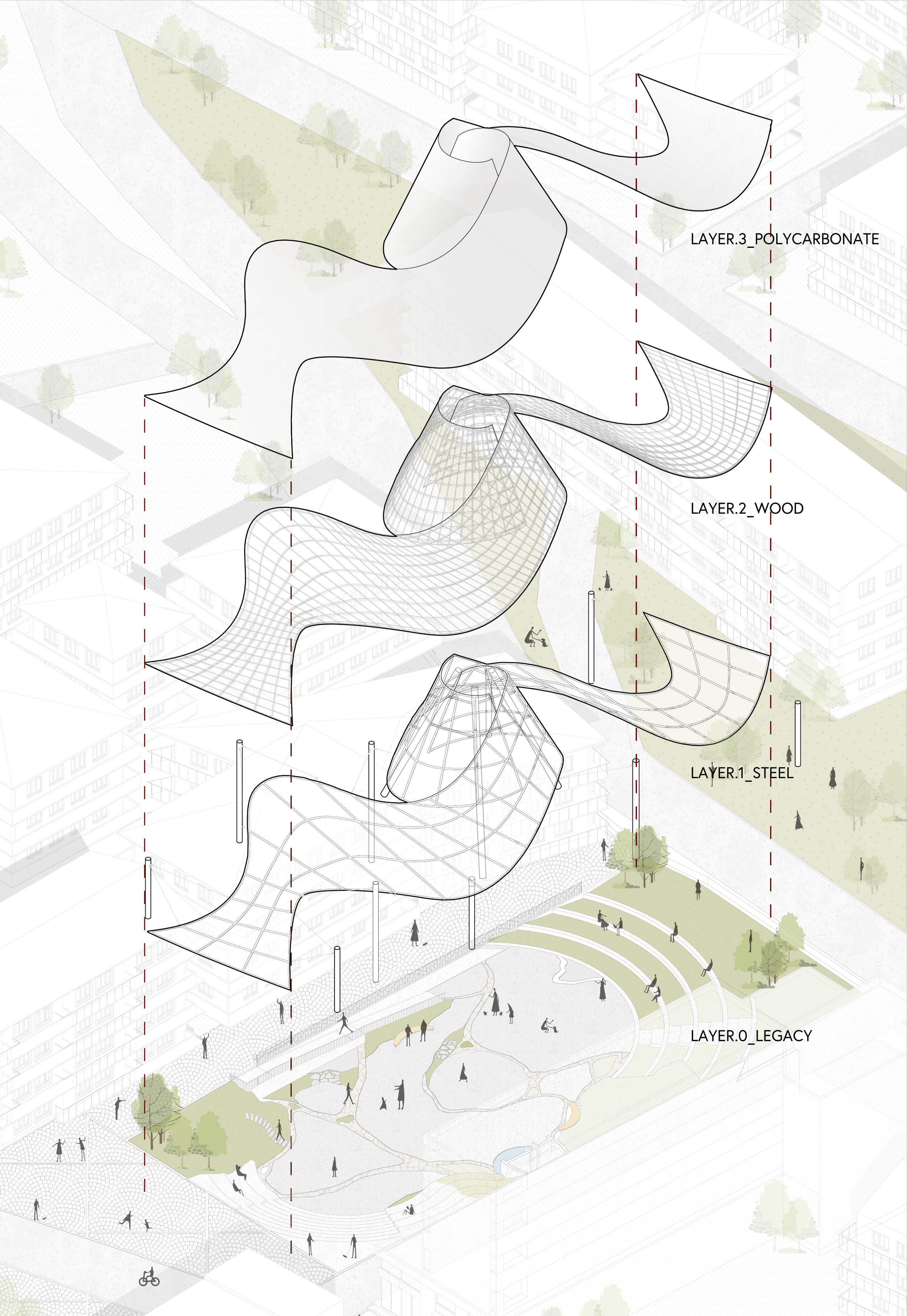
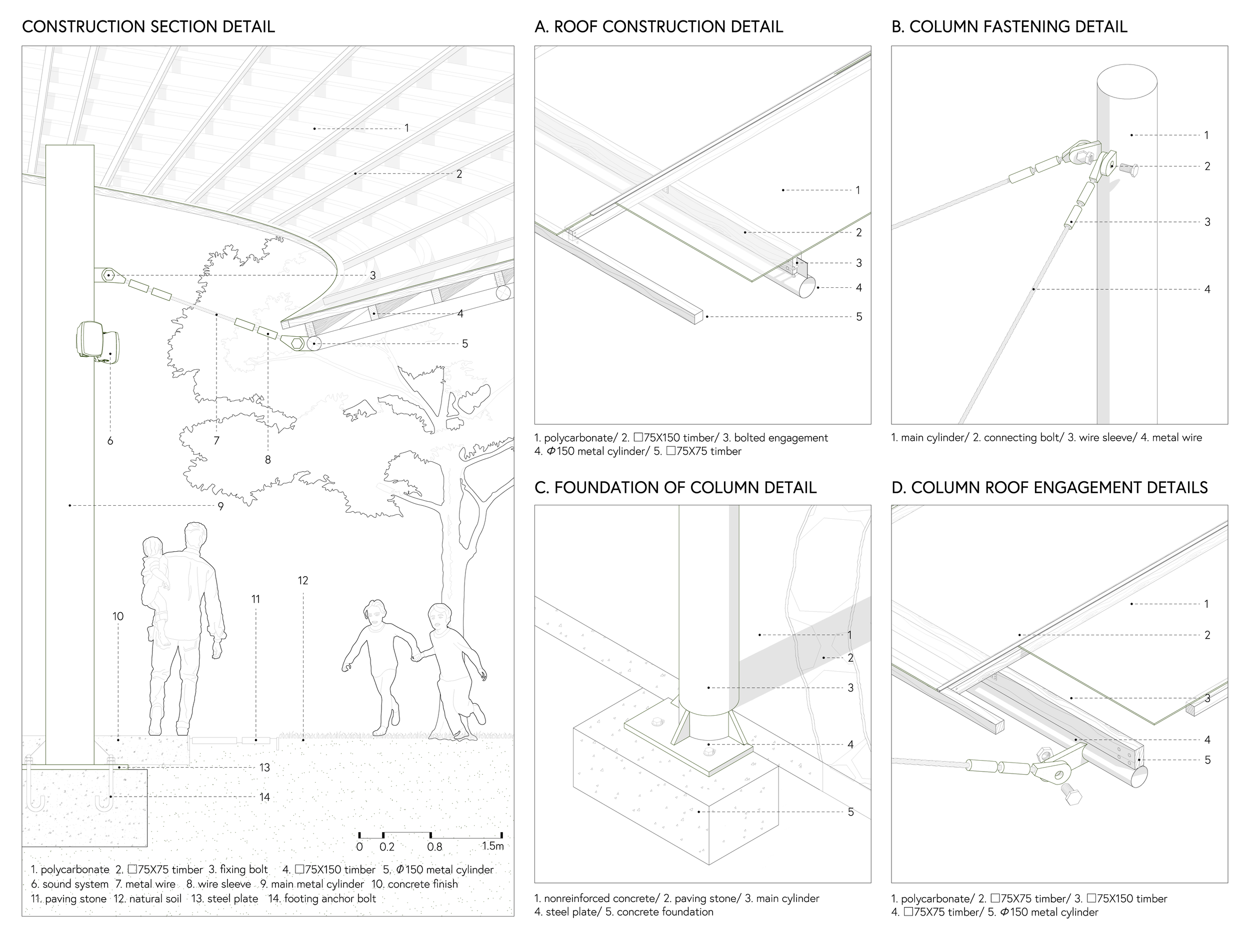
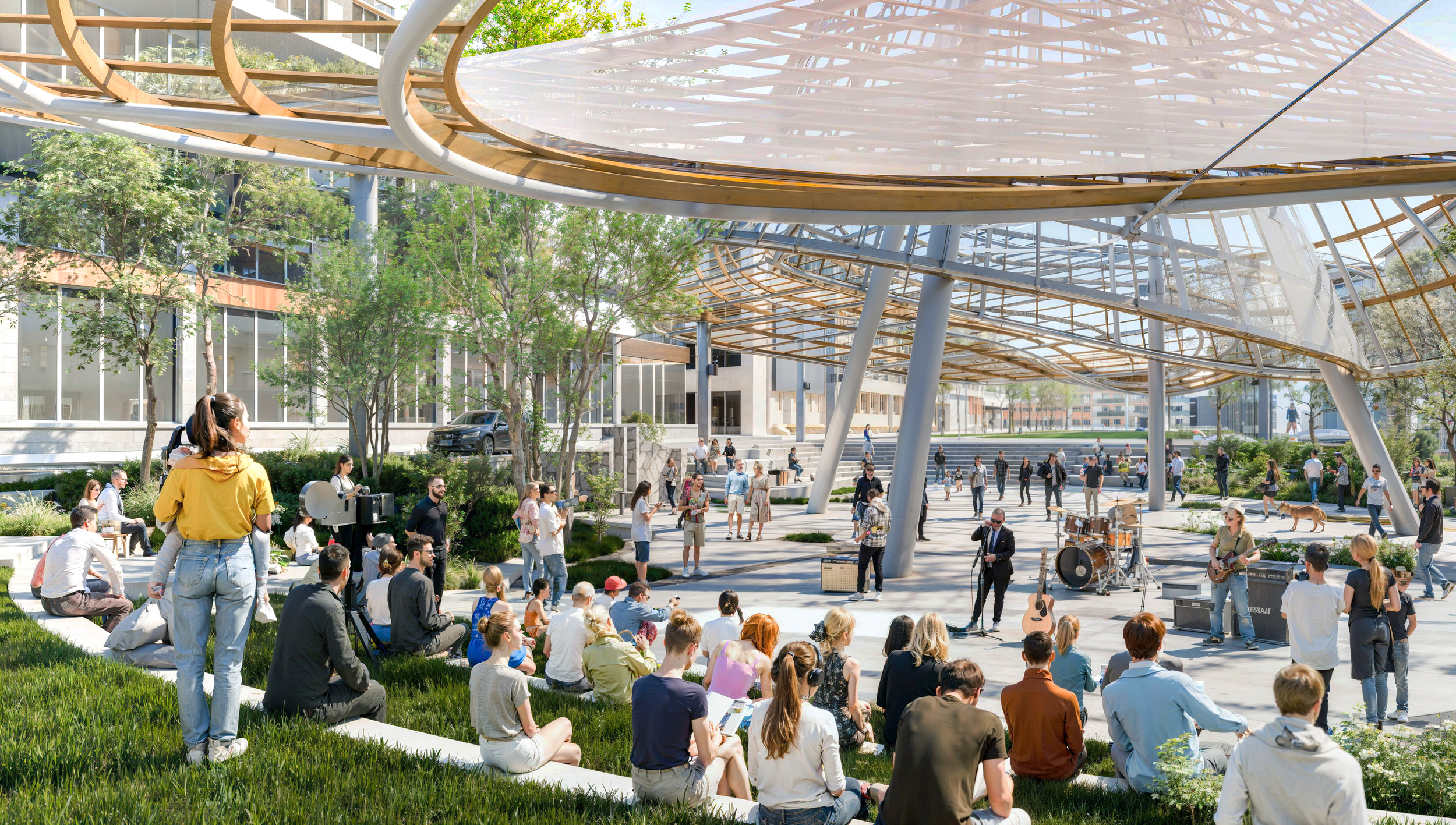
The structure of the pavilion consists of three layers: polycarbonate, wood, and metal. Metal columns arranged horizontally along the ground support the metal frame of the roof through wires. A wooden frame rises like a rafter on top of the metal frame, which is the primary roof structure, and the wooden frame is arranged in accordance with the size of the polycarbonate main body, which is the final finishing material.
The ground level is formed as an open plan due to the columns arranged along the site's perimeter, and a symbolic column is placed only in the center of the cone-shaped roof symbolizing a well. The transparent finishing material allows abundant natural light to enter the space below the roof structure, and the shadows of the wood and metal frames are reflected on the floor, revealing the structural beauty of the pavilion.
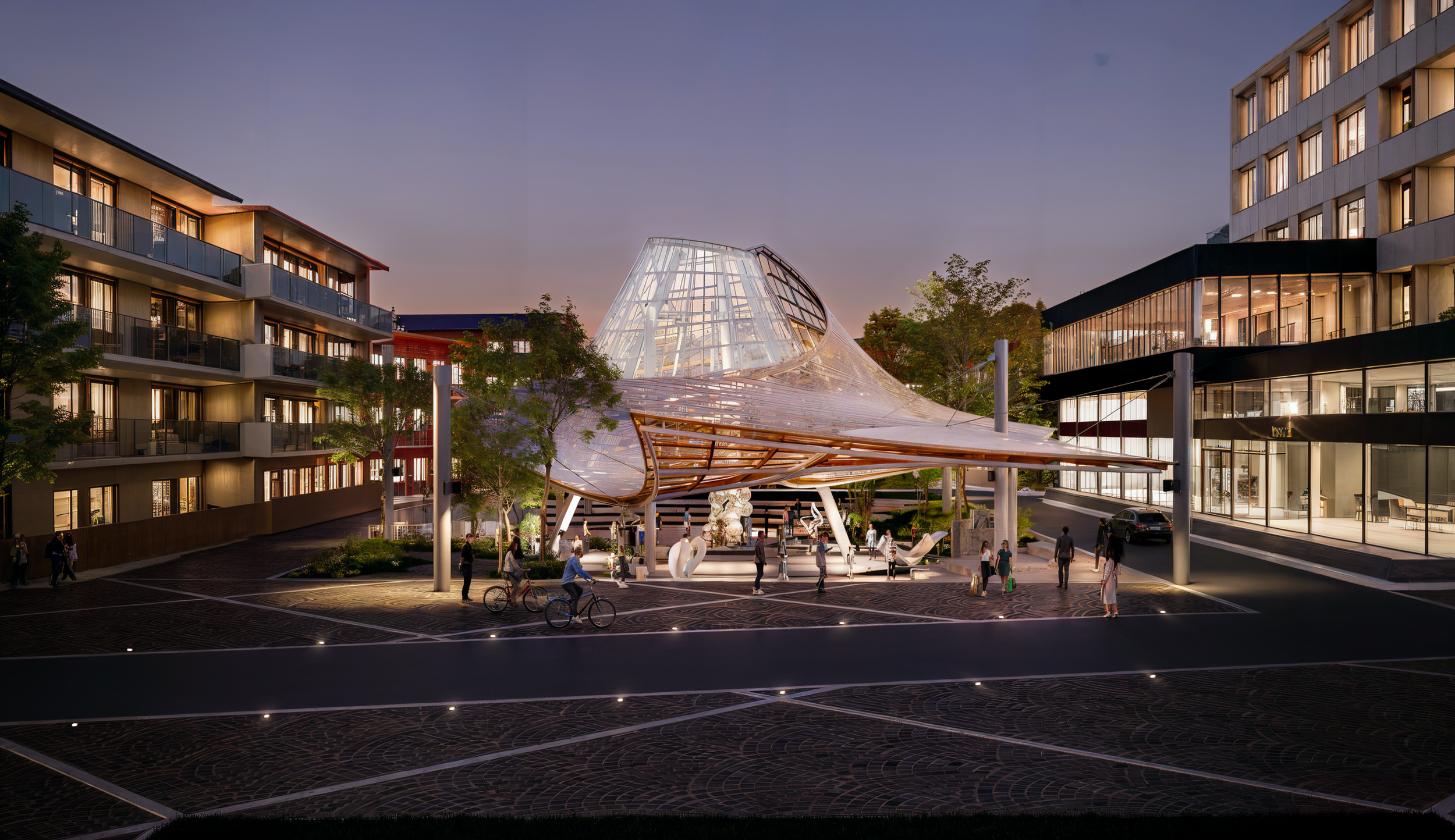
“Upon the memory of the fountain, the time of the square flows again”